
Will it fit?
Two numbers decide it, and neither is the one on the dial. Here they are for all three watches, plus how to measure your wrist in about thirty seconds.
Lug-to-lug and thickness, not case diameter
Case diameter is the number everyone quotes and the one that tells you least. It measures the middle of the watch. What decides whether a watch fits is lug-to-lug — the distance from the tip of the top lug to the tip of the bottom lug, the full length of the watch running along your arm. If that is longer than the flat part of your wrist, the lugs hang over the edge and the watch perches instead of sitting.
The second number is thickness, and it is the one people underestimate. It decides whether the watch slides under a shirt cuff or catches on it, and whether it feels planted or top-heavy. A 38mm watch with long straight lugs can wear larger than a 41mm one with short curved lugs. All three Wrens have curved lugs that turn down sharply, which is why they wear smaller than their diameters suggest.
Diver 38
- Case diameter
- 38mm
- Lug width
- 20mm
- Case material
- 316L stainless
- Water resistance
- 200m
Diver One
- Case diameter
- 41mm
- Lug width
- 22mm
- Case material
- 316L stainless
- Water resistance
- 200m
Diver One Titanium
- Case diameter
- 41mm
- Lug width
- 22mm
- Case material
- Grade 5 titanium
- Water resistance
- 200m
Where the three actually differ
The Diver One and the Diver One Titanium share a case: same 41mm diameter, same 47mm lug-to-lug, same 22mm lugs. On the wrist they take up the same amount of room. What separates them is height and weight — the titanium is 0.9mm thinner and about 45% lighter. The Diver 38 is the outlier: shorter, narrower and 2.6mm thinner than the steel Diver One, which is a large gap in watch terms.
For reference, most 200m divers sit at 13mm or more. Getting a fully lumed ceramic bezel and 200m of water resistance into 10.7mm is the whole argument for the Diver 38.
Both cases, four wrists
One photograph per watch, shot straight down on a 6.75″ wrist — then scaled to the exact proportions it would have at 6″, 6.5″, 7″ and 7.5″. Same lighting, same angle, same distance, because it’s the same frame. Nothing is restyled and nothing is faked with perspective, so the only thing that changes between these images is the one thing that matters: how much of your wrist the watch covers.
A note on these images: these wrist shots were created with AI assistance. We photographed the watch on a 6.75″ wrist and scaled it precisely to show how the same watch reads on other wrist sizes. The proportions are accurate, but they’re still an approximation — nothing beats getting it on your own wrist.
 Diver One Titanium on a 6″ wrist
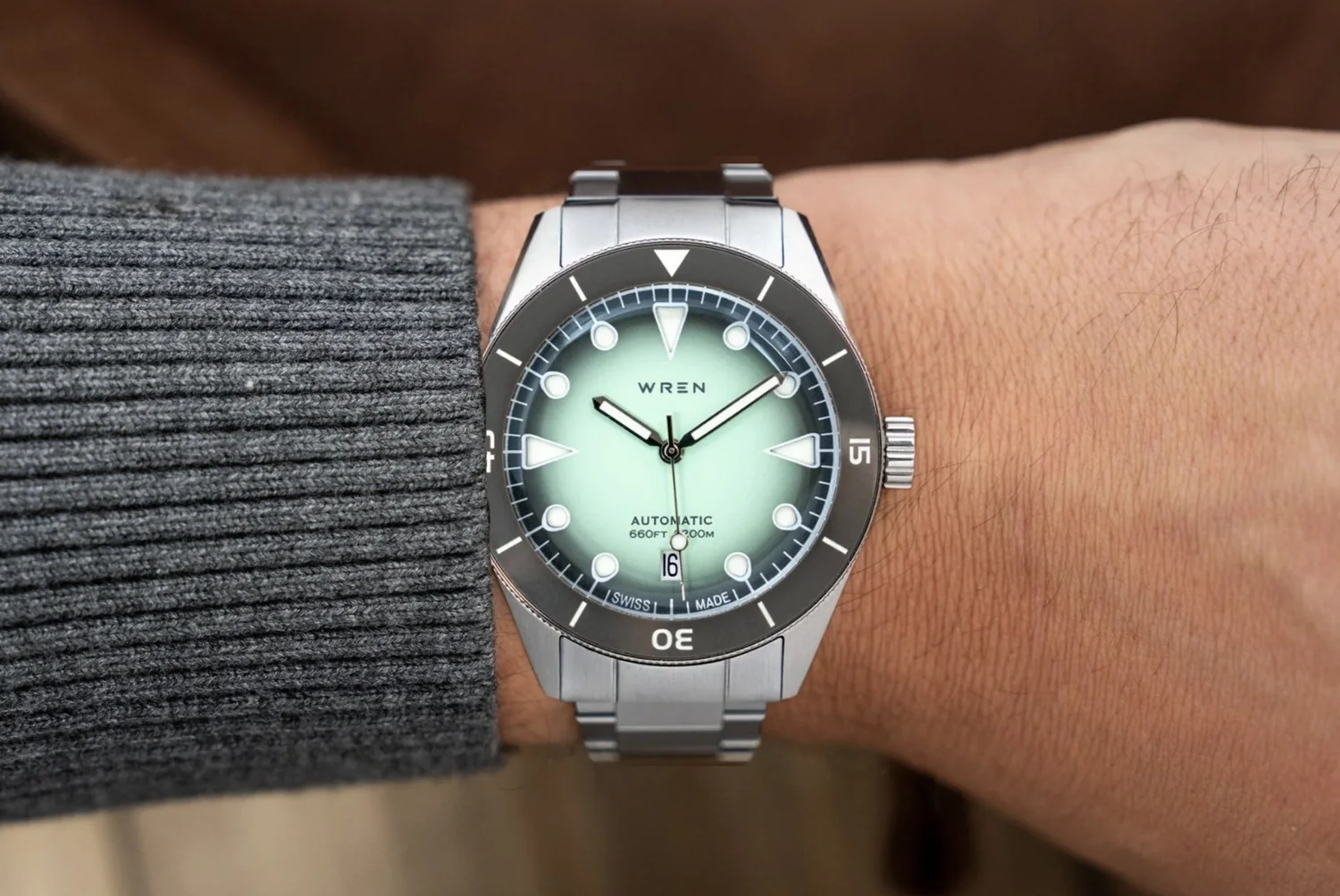 Diver 38 on a 6″ wrist
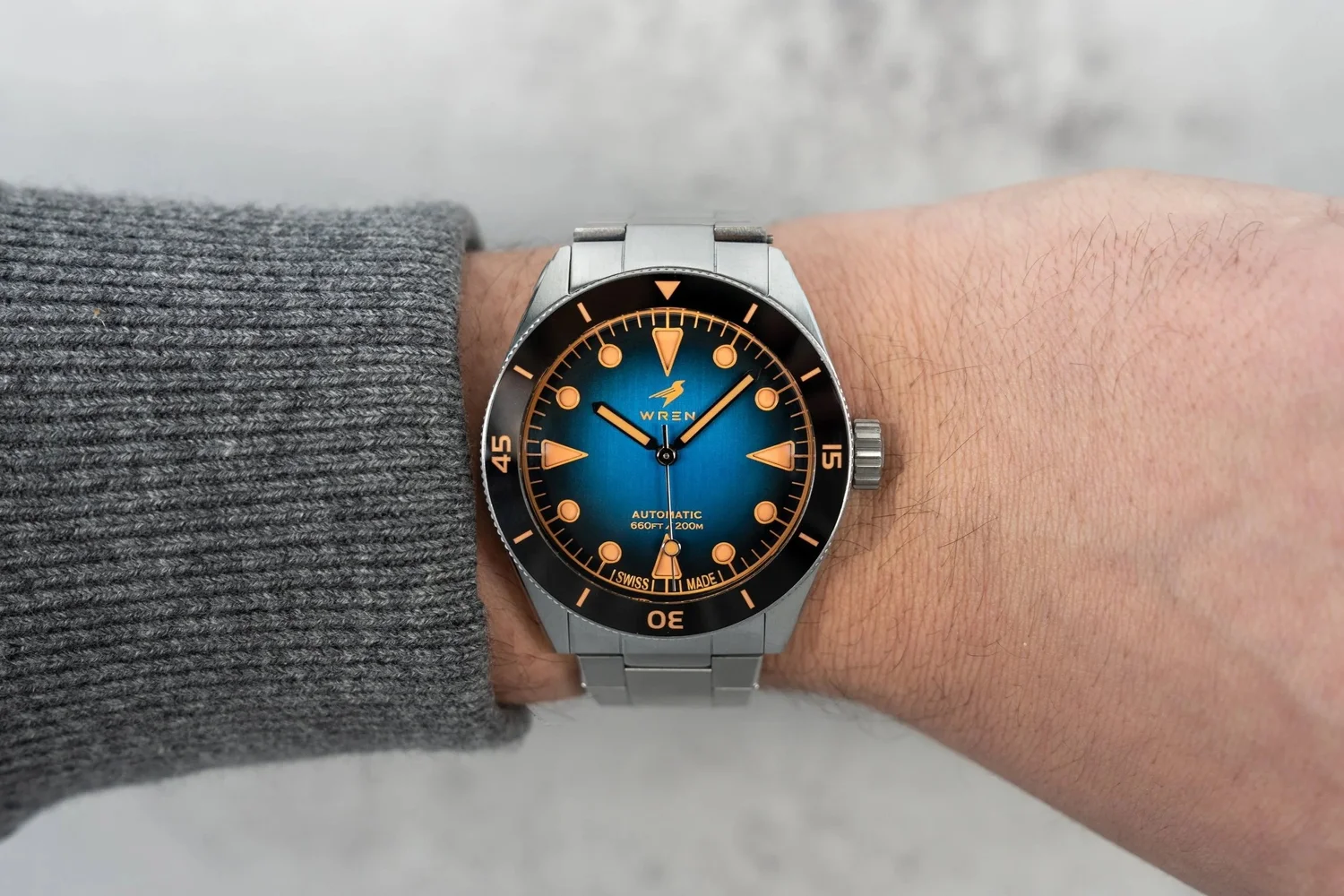 Diver One Titanium on a 6.5″ wrist
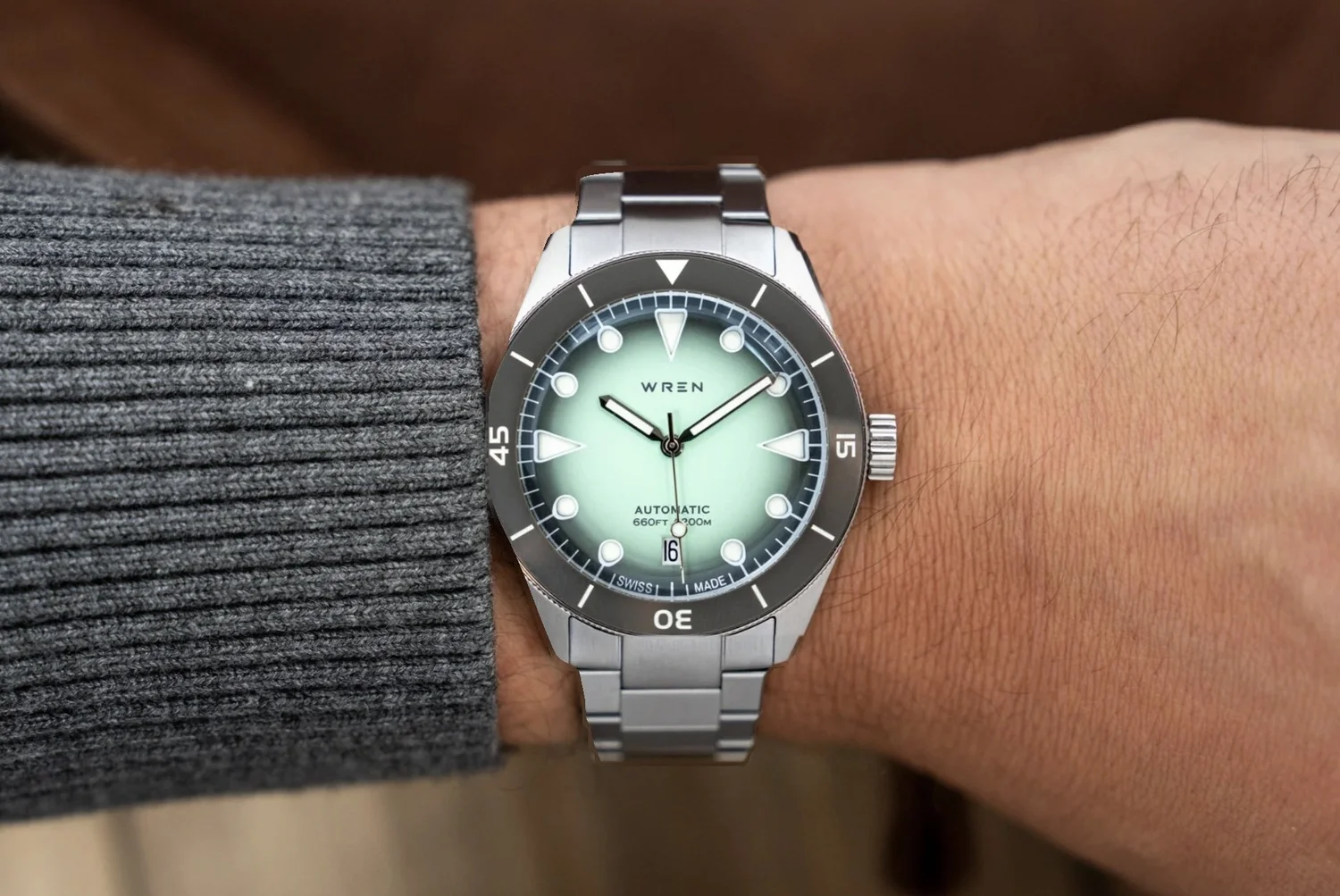 Diver 38 on a 6.5″ wrist
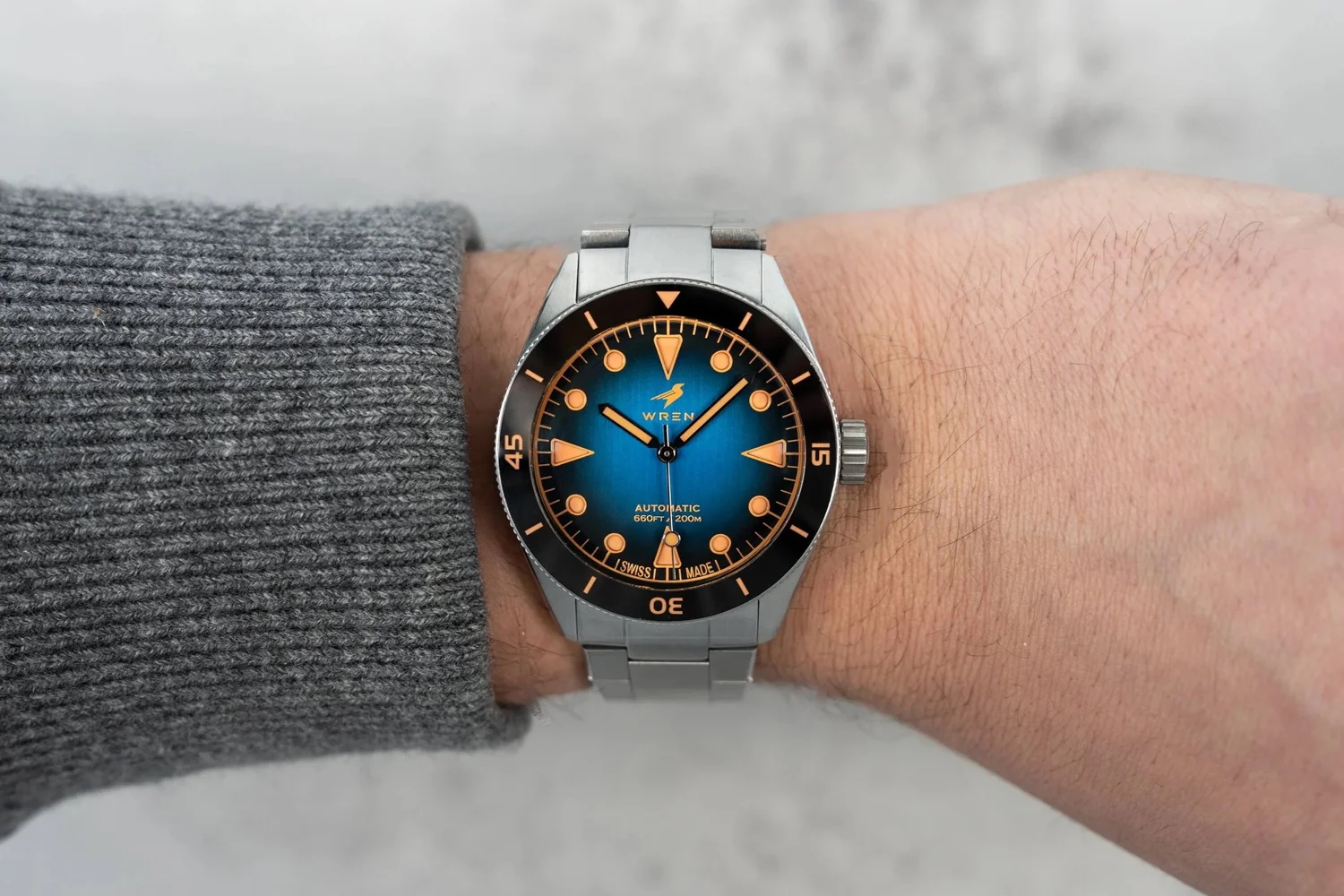 Diver One Titanium on a 7″ wrist
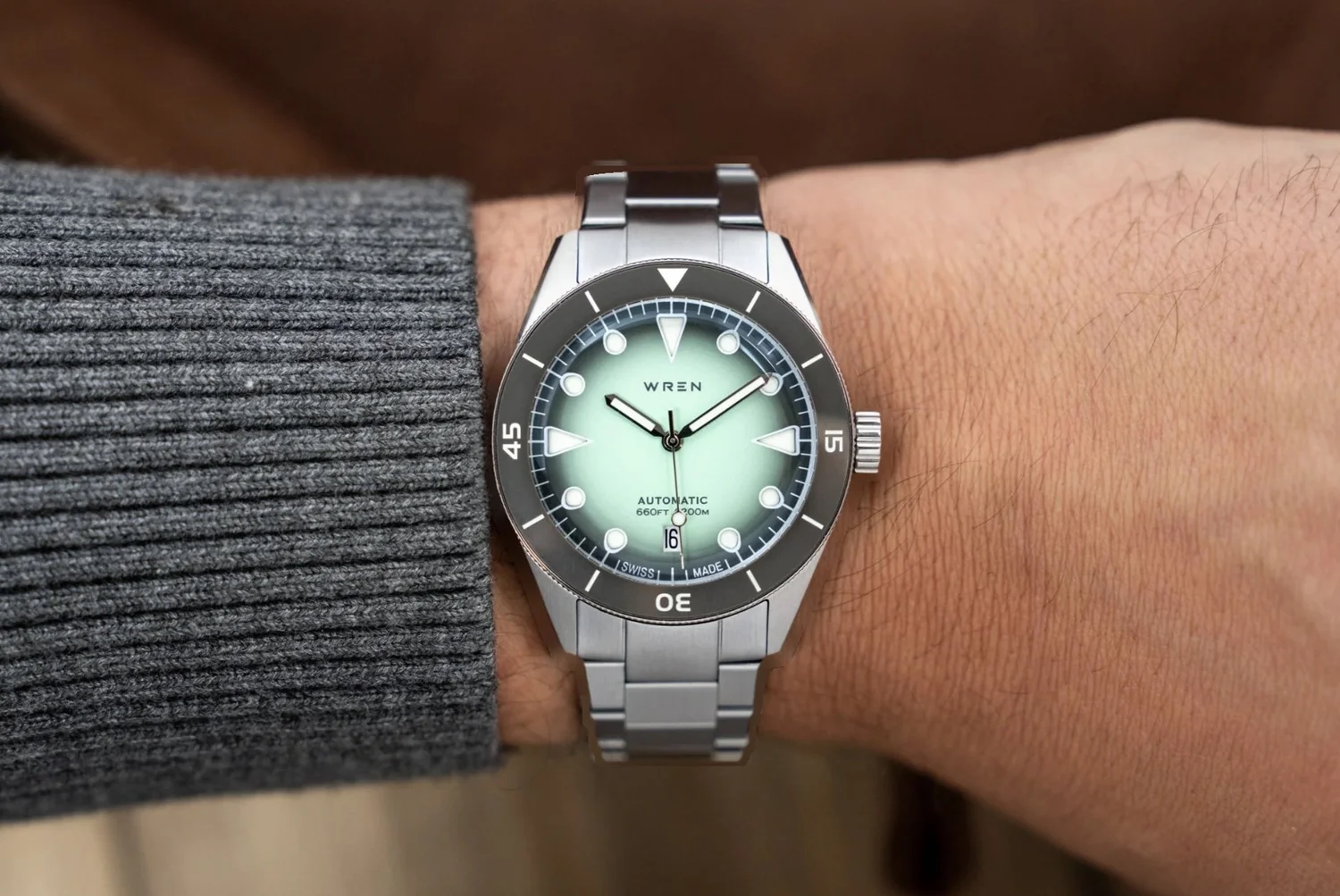 Diver 38 on a 7″ wrist
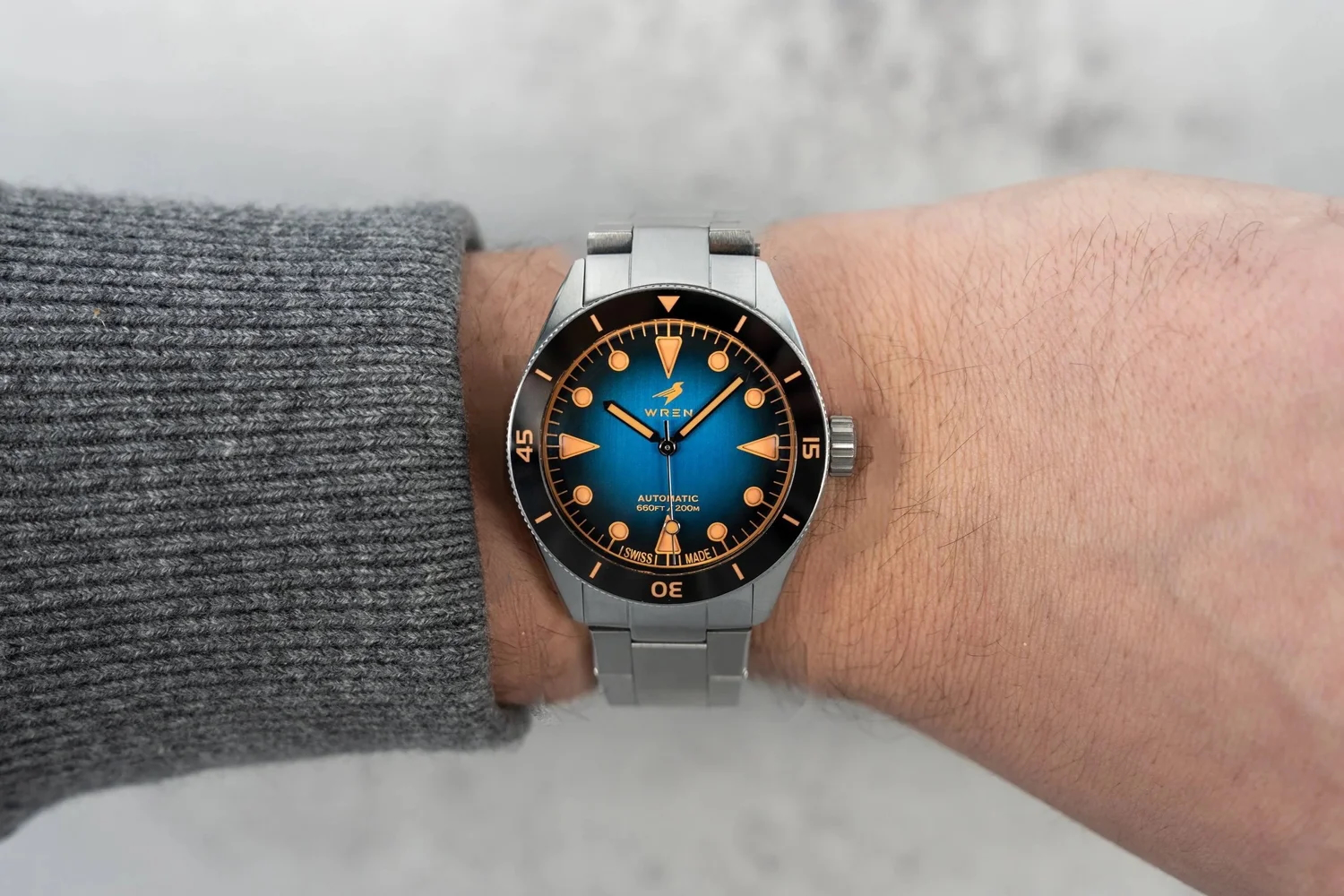 Diver One Titanium on a 7.5″ wrist
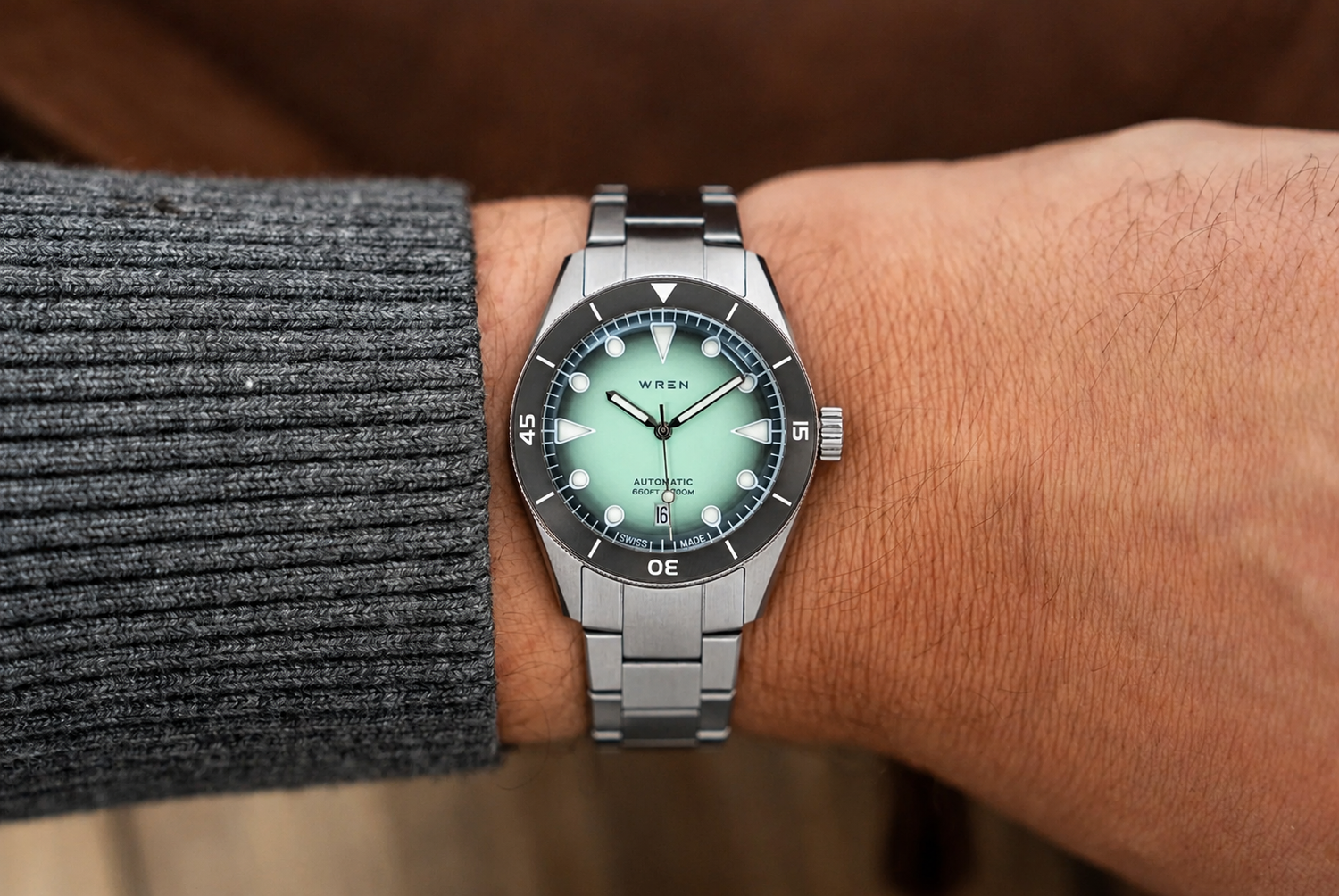 Diver 38 on a 7.5″ wrist
These are the Diver One Titanium in Dusk. The steel Diver One shares the case exactly, so the footprint you see here is identical — it simply sits 0.9mm taller and weighs a good deal more.
How much of your wrist it covers
Lug-to-lug as a share of how wide your wrist is across the top. Below about 85% the watch sits fully within the wrist with the lugs clear of the edge. Above that it starts to fill it completely, and past 100% the lugs overhang.
How we worked this out. Wrist width is estimated from circumference, treating the wrist as an oval roughly one and a half times wider than it is deep, which is typical. Your own wrist may be flatter or rounder than that, and a flat wrist carries a long watch better than a round one of the same measurement. Treat these as a guide, not a verdict.
Measure your wrist
- Wrap something round itA tailor's tape if you have one. If not, a strip of paper or a phone charging cable works — mark where it meets and hold it against a ruler.
- Sit it where you wear a watchJust behind the wrist bone, on the forearm side. Snug enough that it stays put, loose enough to slide a fingertip under.
- Read it, then round upBetween two sizes, take the larger. Wrists swell through the day and in heat, and the Diver 38's clasp has on-the-fly adjustment for exactly that.
Which one should you get?
All three work across a wider range than most people expect. None of them is a small watch or a large one. This is preference more than it is a rule — but if you want a starting point:
Diver 38
- Wrists up to about 6.75″, where it is the most natural fit
- You want it to disappear under a shirt cuff — 10.7mm is genuinely thin for a 200m diver
- You prefer a watch that reads as a tool rather than a statement
- You like 20mm straps, the easiest width to shop for
- Fully lumed bezel, so elapsed time stays readable in the dark
Diver One
- Wrists from about 6.75″ up, though it sits fine below that
- You want more presence and a larger dial to read
- You like the heft of steel and the fumé dials
- 22mm straps and a broader bracelet
- The lowest price of the three, and the only case the Obsidian comes in
Diver One Titanium
- You want the Diver One's proportions without the weight
- About 45% lighter than the steel version, and 0.9mm thinner
- Grade 5 titanium, which is far harder than the Grade 2 most brands use
- Best choice if a heavy watch bothers you through a long day
- Also 22mm, so straps swap with the steel Diver One
Still torn? Nothing here is final — you have fourteen days to exchange or return once it arrives, and we would rather help you choose than process a swap.
Bracelet and strap sizing
The Diver 38 takes 20mm straps. The Diver One and Diver One Titanium both take 22mm, so straps move between them freely. All are standard widths on spring bars, so any quality strap in that size fits.
Bracelet links are screwed rather than pinned, so they come out cleanly with a properly fitting screwdriver — or any watchmaker will size it in a few minutes. The Diver 38's clasp also has on-the-fly micro-adjustment of roughly 12mm, which means you can let it out in the afternoon without tools. Full instructions are on the care page.
Still not sure?
Send us your wrist measurement and we will tell you which one we would put on it — including if the answer is neither. We would rather talk you out of the wrong one than take the return.
Ask usRead the FAQ